
The Supreme Court of India has rejected a plea by a woman claiming to be the legal heir of the Mughal emperor Bahadur Shah Zafar-II, seeking possession of the Red Fort in Delhi. The court termed the plea as "misconceived" and "meritless", dismissing the petition against the Delhi High Court order. The petitioner, Sultana Begum, argued that her family was deprived of the Red Fort by the British East India Company after the first war of Independence in 1857. The court, however, dismissed the petition, citing the delay in filing the appeal and the lack of justification for the claim.
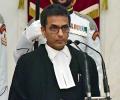
What sustains judicial institutions in the long run is the sense of compassion, sense of empathy and ability to answer cries of citizens, he said.

Justice Kamal Narain Singh, who was the CJI between November 25, 1991 and December 12, 1991, had a tenure of 18 days.
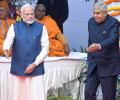
The RSS which catapulted Jagdeep Dhankar to national prominence after 21 years of hibernation could not come to his rescue when BJP higher ups decided to seek his resignation, points out Prakash Bhandari.
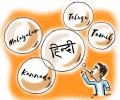
Hindi Diwas was observed across India with leaders emphasizing Hindi's role as a unifying factor and the need to enrich all Indian languages. Events were held in India and abroad to promote the language.
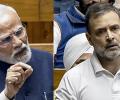
A committee led by Prime Minister Narendra Modi met to select the next chairperson of the National Human Rights Commission (NHRC). Congress president Mallikarjun Kharge and party leader Rahul Gandhi attended the meeting as leaders of the opposition in Rajya Sabha and Lok Sabha respectively. The post has been vacant since Justice (retd) Arun Kumar Mishra completed his tenure on June 1. The committee, which selects the NHRC chief, is headed by the prime minister and includes the Lok Sabha Speaker, home minister, leader of opposition in Lok Sabha, leader of opposition in Rajya Sabha, and deputy chairperson of Rajya Sabha.

Odisha Chief Minister Mohan Charan Majhi on Tuesday announced ex gratia of Rs 20 lakh for the family of the college student who died by setting herself on fire over alleged inaction on her sexual harassment complaint.
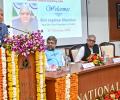
Vice President Jagdeep Dhankhar has questioned the Chief Justice of India's involvement in executive appointments, specifically citing the selection of the CBI director. He believes this practice undermines democratic principles and calls for revisiting the existing norms. Dhankhar also raised concerns about the "doctrine of basic structure", suggesting it has a debatable jurisprudential basis. He emphasized the importance of each institution operating within its constitutional boundaries and highlighted the need for coordinated autonomy. The vice president also discussed the need for a balanced approach to judicial review and the importance of judges focusing on judgments rather than other forms of expression. He stressed the need to revisit the current state of affairs to restore the judiciary's sublimity.
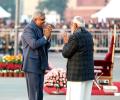
The BJP had no option but to get Jagdeep Dhankhar out of its way for the sake of the Modi government's stability, reveals Sheela Bhatt, the legendary political journalist.

'One of the major challenges to the protection of rule of law and human rights is the inability of the formal justice system to deliver speedy and affordable justice to all'

India has identified Azhar as the mastermind of the Pathankot terror attack on January 2, 2016.
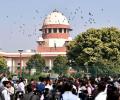
The Supreme Court collegium headed by CJI N V Ramana has learnt to have recommended eight names of judges, including acting chief justice of Calcutta High Court Justice Rajesh Bindal, for their elevation as chief justices of different high courts.

'They might not have liked his judgments on IT rules, the Election Commission and Pondicherry.'

While naming him as the NDA candidate for the Vice President's post, the BJP had described him as 'Kisan putra', a move seen in the political circles aimed at reaching out to the politically significant Jat community which had participated in huge numbers in the year-long farmers' protests against agriculture reform measures unveiled in June 2020.

The Indian government has revoked 14 categories of visas for Pakistani nationals, including business, conference, visitor, and pilgrim visas, following the terror attack in Pahalgam, Jammu and Kashmir. The decision was made after a Cabinet Committee on Security meeting, and the Home Minister has instructed state governments to ensure that all Pakistani nationals leave India by the set deadlines. The order does not apply to Long Term Visas (LTVs) and diplomatic and official visas issued to Pakistani nationals.
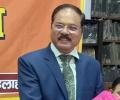
Justice Shekhar Kumar Yadav, an Allahabad High Court judge, is set to appear before the Supreme Court Collegium to explain his controversial statements made at a Vishva Hindu Parishad (VHP) function. The Supreme Court has sought a report from the Allahabad High Court after news reports surfaced regarding Justice Yadav's remarks, which were widely condemned as "hate speech". The judge's statements, made at a VHP event, sparked outrage from various quarters, including opposition leaders and lawyers. The Bar Association of India has also condemned the judge's remarks and called for an apology.

Modi also said that Lord Ganesh was "put behind bars" in Karnataka by these people.
The Supreme Court would likely hear on Wednesday a plea of Ashoka University's faculty Ali Khan Mahmudabad against his arrest for his social media posts over Operation Sindoor.
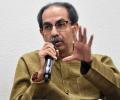
Shiv Sena-Uddhav Balasaheb Thackeray chief Udvav Thackeray launched a scathing attack on the Bharatiya Janata Party and said that anyone who spreads communal disharmony 'can't be a Hindu', while also affirming that the 'Hindutva' of his party is 'clean'.

Jailed former Pakistan prime minister Imran Khan has invoked the case of Delhi Chief Minister Arvind Kejriwal getting bail to campaign ahead of India's general elections, as he complained before the Supreme Court about the mistreatment meted to him in jail.
Justice Gavai's comment came while the apex court bench, also comprising Justice Augustine George Masih, was considering a fresh plea seeking an inquiry into the recent violence in West Bengal during anti-Waqf law protests.
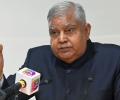
Dhankhar, who represented the Kishangarh Assembly constituency as a Congress MLA from 1993 to 1998, received pension as a former legislator until July 2019. It was discontinued after he was appointed the governor of West Bengal.
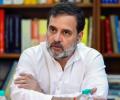
The Supreme Court of India reprimanded Congress leader Rahul Gandhi for his remarks about Vinayak Damodar Savarkar, calling them "irresponsible." The court stayed criminal proceedings against Gandhi in a case filed in Uttar Pradesh for his comments but warned him against making such statements in the future. The court also asked Gandhi's lawyer if he was aware that even Mahatma Gandhi used terms like "your faithful servant" in his communications with the British.
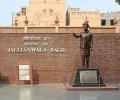
Former Supreme Court judge Justice Rohinton Nariman has warned that events similar to the Jallianwala Bagh massacre could occur if the 'basic structure' doctrine of the Constitution is diluted. In his new book, 'The Basic Structure Doctrine: Protector of Constitutional Integrity,' Nariman argues that the 1973 Kesavananda Bharati judgment, which established the doctrine, is essential for protecting fundamental rights and preventing constitutional amendments that could lead to such tragedies. Nariman's concerns are echoed by Supreme Court judge Justice K V Viswanathan, who applauds the book for its "chilling clarity" and underscores the importance of the Kesavananda Bharati ruling. The book provides a detailed analysis of the doctrine and its implications, highlighting the robustness of the Kesavananda Bharati judgment and the lack of a compelling alternative theory.
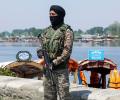
The United Nations Secretary-General, Antonio Guterres, has called for de-escalation between India and Pakistan, expressing deep concern over rising tensions following a terrorist attack in Jammu and Kashmir. Guterres reiterated his condemnation of the attack and urged both sides to avoid a confrontation, which he described as catastrophic. The Secretary-General has also offered his good offices to support de-escalation efforts. The President of the UN General Assembly, Philemon Yang, has also expressed concern over the escalating violence and called for a resolution through diplomatic means. Meanwhile, Pakistan has denied any involvement in the attack and reiterated its commitment to fighting terrorism.

The Enforcement Directorate on Friday withdrew its summons to a senior lawyer for reportedly giving legal advice in a case after the Supreme Court Advocates on Record Association (SCAORA) wrote to the chief justice of India for taking note of the action.
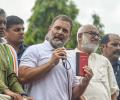
Congress leader Rahul Gandhi accused the BJP of rigging the Maharashtra assembly elections and expressed concerns about similar tactics being used in the upcoming Bihar polls. He alleged that the special intensive revision of electoral rolls in Bihar is an attempt to manipulate the election process.

Leading Kuki-Zo groups in Manipur welcome Prime Minister Narendra Modi's likely visit, hoping he will address their aspirations for a separate administration and lasting peace in the region affected by ethnic violence.

Congress leader Rahul Gandhi accuses the BJP-led government of stealing votes with the help of the Election Commission during a rally in Siwan, Bihar.

'Justice B V Nagarathna has excellent human qualities and is a stickler for the law.'
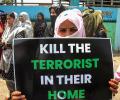
Amid rising tensions between India and Pakistan, the US has called on both countries "not to escalate" the conflict. Secretary of State Marco Rubio is expected to speak with the foreign ministers of Pakistan and India as early as today or tomorrow. The US State Department said Washington is reaching out to both India and Pakistan "regarding the Kashmir situation" and telling them "not to escalate the situation."
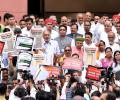
While India today is vastly different from the India of 1975, the need for vigilance against authoritarianism remains the same, asserts Utkarsh Mishra.
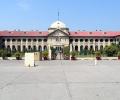
The Supreme Court on Tuesday took exception to the Allahabad high court's recent remarks in a rape case as reportedly saying the complainant "herself invited trouble", and wondered why it made such observations while deciding a bail plea.

Glimpses from India and around the world that will make you smile and cry.

Gandhi urged the prime minister to speak out "clearly, boldly and forthrightly" on behalf of the legacy that India has long represented.

Rider Fateh Jahan Singh Dhaliwal, aged 16, has also approached the court, through his mother, seeking quashing of the list of selected athletes and requested "further directions to conduct the shortlisting of riders for the Asian Youth Games".
Former chief justices of India, who have conveyed their views to a parliamentary committee on the bill proposing simultaneous polls, have endorsed the constitutionality of the 'one nation, one election' concept but have raised concerns over its various aspects, including the power given to the Election Commission, and offered suggestions.
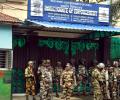
The Supreme Court of India has repeatedly criticized the Enforcement Directorate (ED) for exceeding its authority and misusing its powers. The latest rebuke came on Thursday, when the court accused the agency of 'crossing all limits' in a money laundering probe against a Tamil Nadu state-run liquor retailer. This follows a string of similar observations by the Supreme Court and high courts across India, raising concerns about the ED's investigative practices and the potential for misuse of its powers.
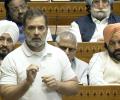
"More voters were added in Maharashtra in five months between the Lok Sabha and assembly polls than in five years," the former Congress president said.
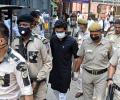
The Supreme Court of India questioned whether former JNU student Sharjeel Imam can be prosecuted in multiple states for sedition based on a single speech. The court is considering a plea to club multiple FIRs filed against Imam in Uttar Pradesh, Assam, Manipur, and Arunachal Pradesh for his alleged inflammatory remarks during protests against the Citizenship Amendment Act (CAA). The court is concerned about the potential for double jeopardy and has indicated that it may transfer the cases to Delhi.
